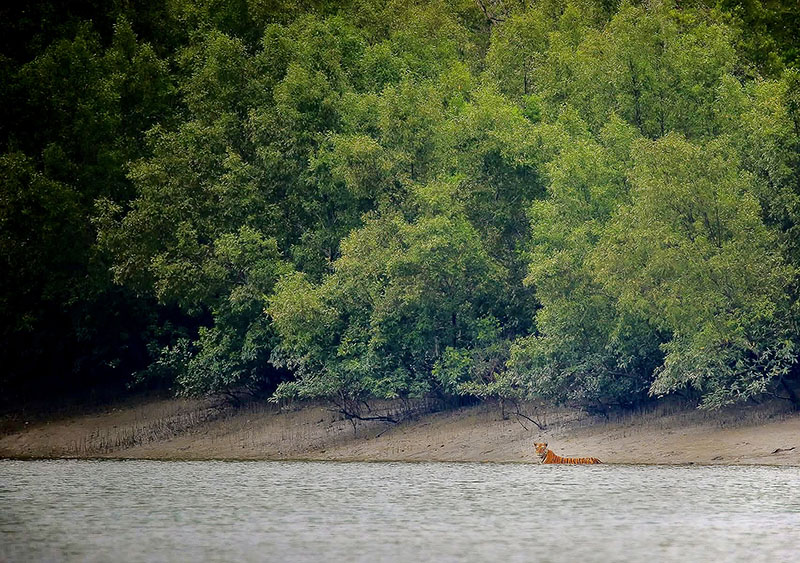
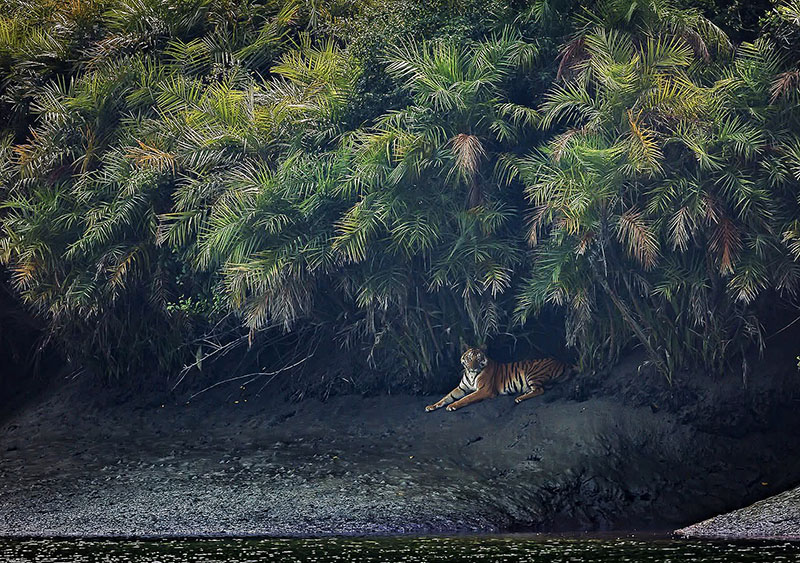
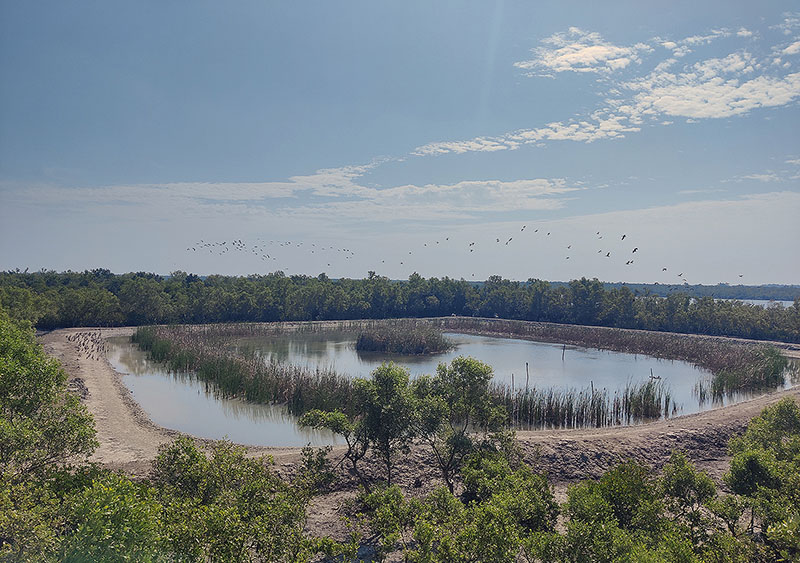
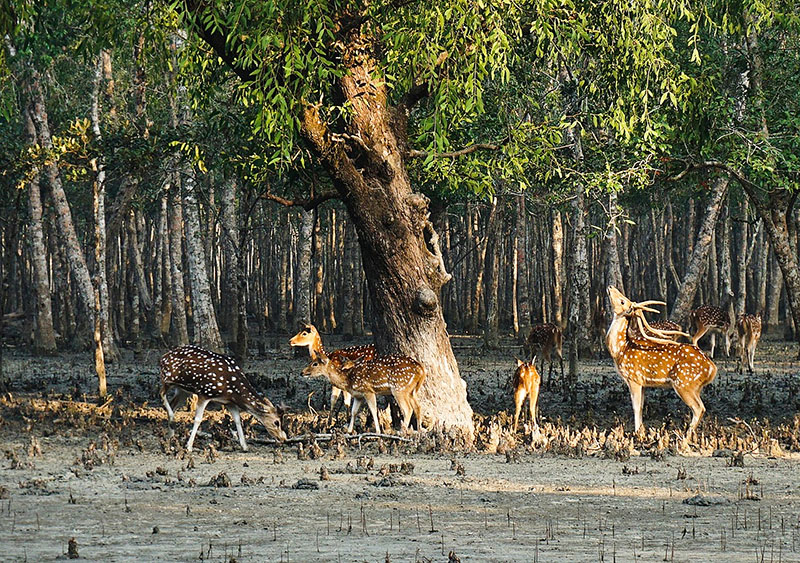
The Sundarbans is a place where the land and sea engage in a perpetual, rhythmic duel, creating the world’s largest halophytic mangrove forest. A UNESCO World Heritage site, this mystical delta is a labyrinth of winding emerald waterways, mudflats, and dense canopy that feels like the very edge of the civilized world. What makes it an incomparably lovely visit is the sheer, quiet tension of the wilderness—the thrill of scanning the golden-brown Sundari trees from a boat, hoping for a glimpse of the legendary Royal Bengal Tiger or the prehistoric silhouette of an estuarine crocodile. It is a destination that demands you slow down and tune your ears to the whistling of the wind through the pneumatophores (breathing roots) and the distant calls of the spotted deer.
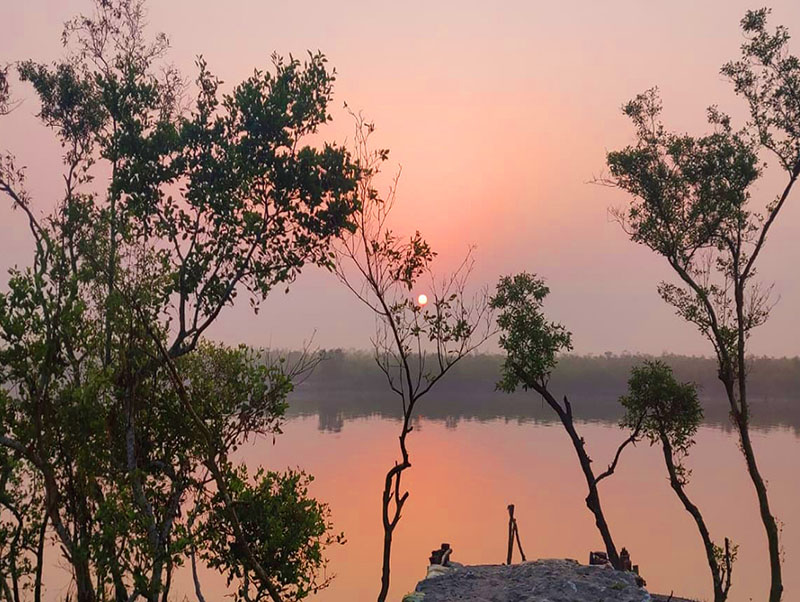
Beyond the thrill of the “man-eater” lore, the Sundarbans offers a hauntingly beautiful, ethereal landscape. Watching the sun sink into the Bay of Bengal, turning the silver waters into liquid bronze while thousands of birds return to their nests, is a spiritual experience. The local culture is equally captivating, rooted in the worship of Bon Bibi (the forest goddess), where Hindus and Muslims alike pray for protection before entering the tide country. It is a land of extreme resilience and breathtaking natural geometry, perfect for those who want to lose themselves in a world where nature still reigns supreme.

The nearest airport is the Netaji Subhash Chandra Bose Airport at Kolkata. From there one can take road journey and after that boat ride to reach Sundarbans.
Nearest Railway Station: Canning (about 48 km from Sundarbans). | Local trains run frequently from Sealdah (Kolkata) to Canning. | From Canning, buses or hired vehicles can take you to boat points such as Namkhana, Raidighi, Sonakhali, or Najat.
Bus: Buses are available from Kolkata and Howrah to: • Namkhana (105 km) • Sonakhali (100 km) • Raidighi (76 km) • Canning (64 km) • Najat (92 km) | Car/ Taxi: A 3 - 4 hours drive will make you reach these entry points.